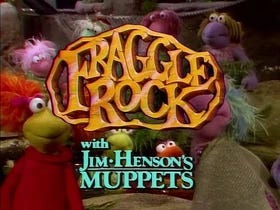
As a kid, Fraggle Rock was my favorite TV show. I can’t really explain why. Maybe it was the characters, the songs, the sets, or its whole vibe, but for whatever reason, I loved it, and my entire way of seeing the world is in no small part built on a substrate of Fraggles.
So I was naturally excited when Apple TV teased a new Fraggle series and delivered it to us in early 2022.
Unfortunately, I was deeply disappointed by what we got. I’ve made it through every episode of Back to the Rock, but it was a painful exercise in patience. After watching the Christmas special they released this year, I’m starting to get a sense for what feels so wrong about the new series to me. I’ll see if I can work it out below, but apologies in advance if this descends into ranting about how Apple TV is ruining my childhood.
NB: Obviously, there will be spoilers, though I’d be surprised if anyone cared. Also, I’m going to assume a fair degree of familiarity with the source material for the rest of this post. Sorry if that means it doesn’t make much sense to you, but if that’s the case then you probably didn’t care that much about what happens to Fraggle Rock anyway.
Setting
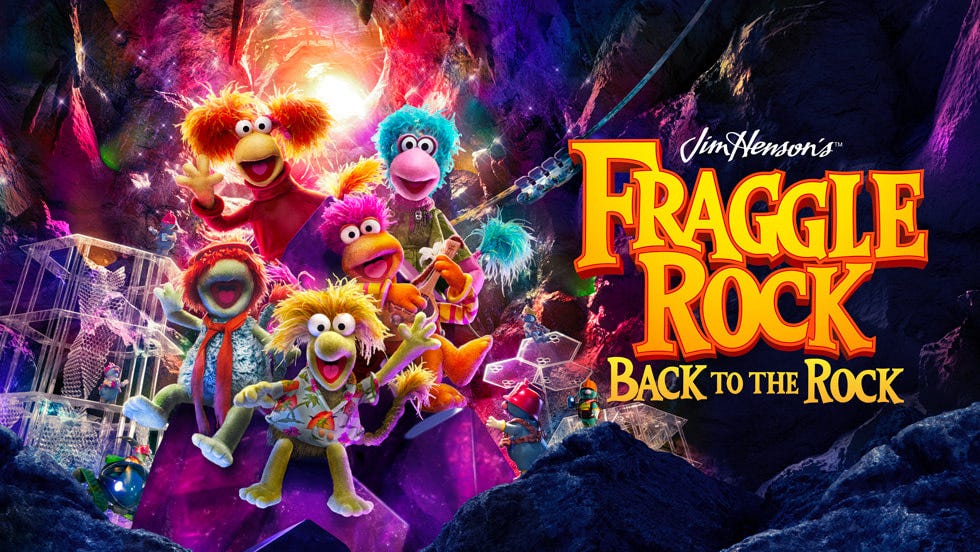
Back to the Rock (BttR hereafter) is nominally set in the same universe as the original series and is a continuation of it. The reality is more complicated.
There is some continuity with the events of the original series, and those events are occasionally referenced. We also have a bunch of changes that break continuity, which is terrible and confusing. Thus, BttR is neither a reboot nor a sequel, but something far worse: it’s fan fiction.
For example, Sprocket is somehow both the same character as before and not, so he chases Gobo but also knows him and seems to remember having lived with Doc in the workshop, which means he should already be friends with Gobo. Similarly, Junior Gorg is both back to having an interest in catching Fraggles, but also is now much friendlier to Fraggles, and quickly switches to being friends with them instead of needing multiple seasons of stories to change his heart. Every character, even minor ones, has problems like this.
The timeline is also unclear. In some sense, the show takes place approximately 30 years after the end of the original series, reflecting the real-world timeline. But also somehow Sprocket is still alive, as are the individual Fraggles from the original series, and none of them have really aged (though maybe this is fine for Fraggles since we have little information on exactly how long they live).
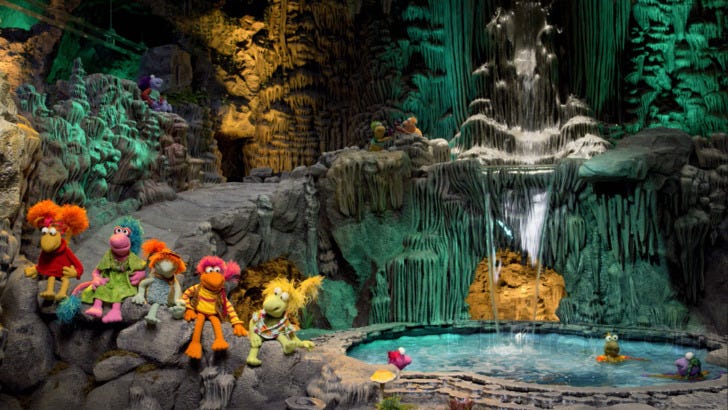
Now to be fair not all the changes are actual consistency issues. The caves in the Rock look different and have a different layout connecting them. This is fine because the original series already established that sometimes the caves in the Rock move and change on their own. The Gorg’s castle looks different, which is a little more concerning because the Gorgs are established to live for thousands of years and are resistant to change, but perhaps we can give them the benefit of the doubt here given how the original series ends.
There are also some general changes to the show’s color palette and the characters’ designs, but they reflect general trends with the Muppets and are not specific to Fraggles or BttR, so I’ll ignore them here.
Characters
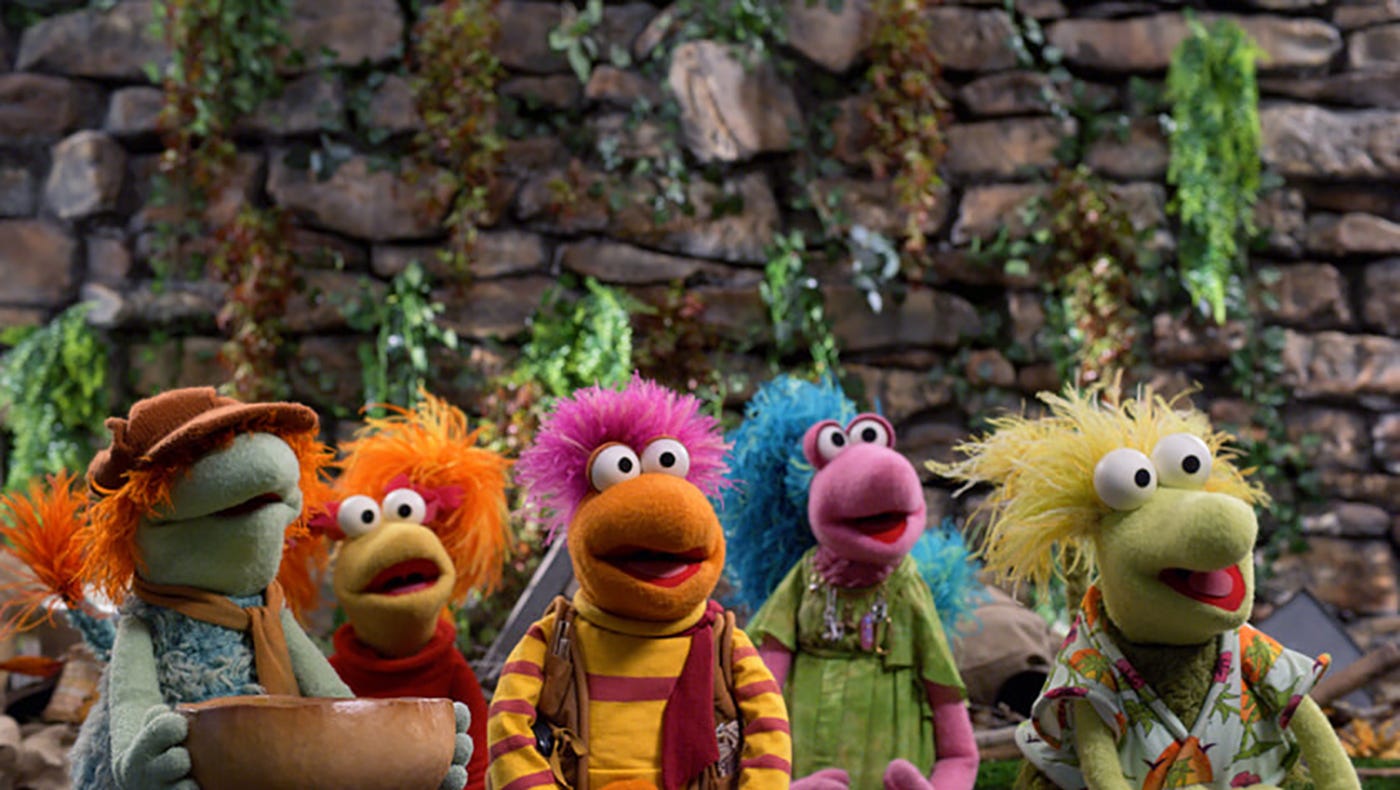
I could probably ignore the setting and continuity issues if those were BttR‘s only problems. Alas, the changes to how the characters are written is where things really go off the rails.
Let’s take the example of Gobo. His defining characteristic in the original series is bravery. He often ends up as the main character because he’s the only one courageous enough to take on some responsibility. Of course, he also suffers the follies of excess bravery, which makes for interesting stories, but the Fraggles depend on him to be the humble hero.
In BttR, he’s still sometimes put into this role, but I get the sense that the writers want us to feel bad about it. His dialogue is a bit different. The fear and uncertainty and awkwardness is turned up. He’s more brash chungus than brave hero. He’s often not allowed to solve his own problems. He doesn’t rely on his friends so much as get saved by luck channeled through them.
Or take Cotterpin. She was originally a fish-out-of-water Doozer who ends up apprenticed to the Architect and is in line to replace him. We can reason that since BttR is 30 years since the original series she’d be further progressed in her career, and she is, but in ways that don’t feel like real development. She’s often presented as being the only Doozer with any real smarts. The Architect is still her boss, but now no longer a source of wisdom to learn from. He’s almost always played as an old fool who is somehow still in charge.
But this doesn’t seem right given what we know of Doozer society. It’s very competence focused. If the Architect can’t do the job, I’d expect him to give it up to Cotterpin when that became clear. Instead, he’s just an empty boss character who wields nominal power that Cotterpin gets to react against. She gets to be a girlboss with no actual purpose to it. In the end, we never feel like Cotterpin is actually competent, just the least dumb of the now much dumber Doozers. I’d much rather have seen a BttR where Cotterpin is now the Architect and must deal with the responsibility and accountability that comes with leadership.
And then we have the new characters. I’m just gonna pick on the most poorly written one, Pogey. Pogey is something like a token diversity character. I think they’re supposed to have autism and ADHD or be otherwise neurodivergent, they come out as non-binary in one episode and then this fact is never referenced again, and they also get increasingly inserted into stories for no purpose other than being there. Pogey is also annoying—not just to me but to the Fraggles—and we see the other Fraggles taking pains to tolerate them.
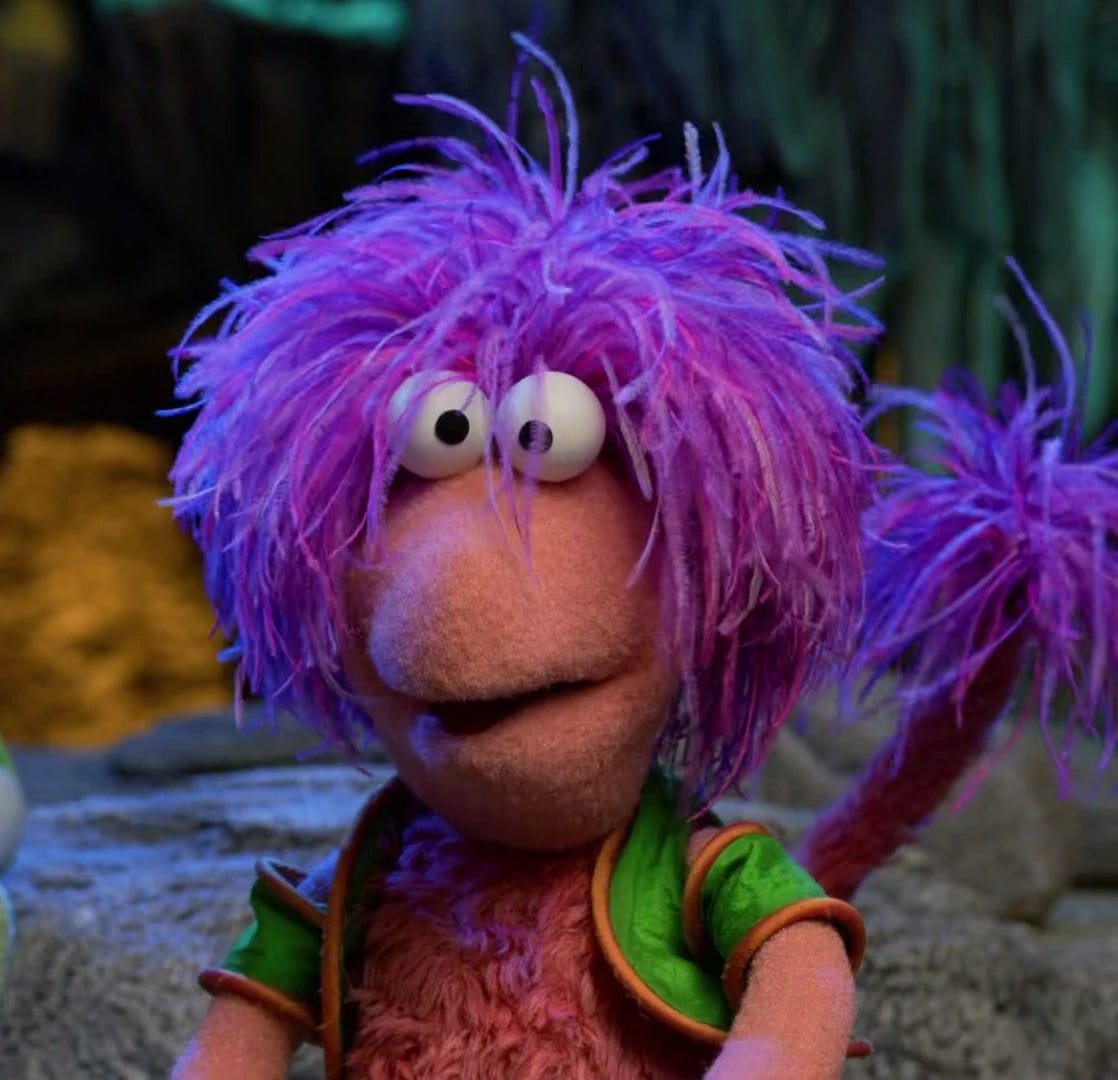
I think there’s a version of Pogey that could have been good. Maybe we could have had a version that just has autism or ADHD or is non-binary. Great! Then we get to see stories about how sensory issues or trouble focusing or being outside the gender binary affects their life. But instead I get the feeling that someone in the writers’ room really wanted to make a character that demonstrates intersectionality and intersected everything they could into a single character, ruining what makes Fraggles Fraggles in the process.
See, the thing about Fraggles is they all have a thing. Gobo is the brave Fraggle; Red is the competitive one; Wembley is indecisive, and so on. The intersectionality happens on the group level, because individual Fraggles aren’t, in some important sense, whole people. Instead, the wholeness comes from their interactions. Boober, for example, is not so much a full character as he is the archetype of anxiety and fear, and he serves the same role in Fraggle society that anxiety serves in our own minds. Yes, he is presented as a full character, but it’s clear that he, and all the other Fraggles, would live a kind of half life if left on their own. They only get to be whole by being part of a whole. That’s their beauty.
But the writers of the new series destroy this by misunderstanding what Fraggles are. They try to write them like they’d write humans instead. The result is, to me, disappointing.
Songs
Most of the new songs suck. This is not worth getting much into, but they mostly suck because their lyrics need to reflect how the characters are written (already discussed) and what the characters are doing (we’ll get to that next). Also, I think too many of the new songs aim to sound contemporary rather than fitting the folksy, out-of-time style common in the original series. Luckily for me, the new writers seem to be adding fewer songs as the show goes on, so maybe this problem will go away on its own.
Plot
Given how the characters are written, it’s not surprising that the episode plots in BttR also have issues.
In the original series, an episode generally has a plot built around some kind of universally applicable lesson, like about sharing or apologizing or dealing with difficulty. Some of these were quite intense, like in one early episode where Red and Boober almost die in a rock slide and grapple with the potential of their own death before they are saved. The stated goals of the original series were to promote world peace and to teach kids from any nation or culture about empathy, interconnectedness, and tolerance. In BttR, this seems to be forgotten.
The episodes in the new series are generally part of larger story arcs. The individual episodes and the arcs have lessons to teach, which is fine and good for this kind of show. Unfortunately, usually those lessons are progressive or otherwise politically leftist. I’m sure I will take some flak for this because in the episodes the lessons are presented as if they are universal, and in some sense they are, but the details make it clear that the writers have a political agenda that is not just empathy, tolerance, and peace, but empathy, tolerance, and peace on their terms and their terms alone.
Consider the main arc of Season 1. The Doozers discover a new building material that lets them be more productive, but it turns out to pollute the water supply. This destroys Craggle Lagoon, displacing the Craggles who must come live as refugees with the Fraggles. The pollution also harms the Merggles downstream. Resolving the issue requires everyone to work together and convince the Gorgs to destroy their fountain so water can flow fast enough to clear the pollution. Meanwhile, in the “Outer Space” segments, the new Doc is a PhD student researching how to remove microplastics from the ocean.
Now, none of this is objectionable on its face. The original series was always about interconnection, and “pollution is bad” isn’t a partisan position. But notice the specific shape of the story: industrial productivity causes environmental harm, which creates displaced populations, which requires collective sacrifice from those with more resources (the Gorgs and their fountain). The Doc segments make the real-world referent explicit. It’s not teaching kids that actions have consequences or that we depend on each other—lessons that would resonate across political lines. It’s teaching a particular story about how environmental problems arise and how they must be solved, one that maps cleanly onto progressive climate politics. The universality has been lost.
There’s a world where this story was written differently. If the writers had Abundance politics, rather than the Gorgs sacrificing their fountain, they enlist the Doozers to help them find a technical solution that makes everyone better off. Or maybe there’s a conservative version where everyone RETVRNs to the way things were before the Doozers started building with their new materials. There’s any number of ways to tell the story differently, and those differences would mostly reveal different political biases.
There’s also a world where BttR tells a story about pollution and interconnection that’s more abstract. Most likely this wouldn’t be a long, multi-episode arc, which is perhaps why those were rare in the original series. Instead we’d have something like a one to two episode arc about Doozers polluting the water and then finding some clever compromise solution to deal with it. It doesn’t push the same kind of political message, which I think the writers likely explicitly wanted to do, but it does better serve the original spirit of what the Fraggles are.
Conclusion
I really wanted to like BttR. I’ll honestly probably keep watching whatever new Fraggle Rock content Apple produces even if I don’t like it. But I wanted to write this anyway because I wanted to at least lament what we lost.
Fraggle Rock was, like many of Jim Henson’s projects, meant to be for everyone, no matter their birthplace, language, or culture. The show was even localized, and if you look you can find alternative versions of Doc and Sprocket, just like you can find alternative versions of Big Bird on Sesame Street. What I love about it is that it’s a show that’s ultimately trying to teach compassion, and that’s something I think we desperately need more of in the world.
Unfortunately, BttR turns Fraggle Rock into yet another front in the political battle over everything. It’s now a Blue Tribe show for Blue Tribe kids, because don’t you know we can tolerate anyone except the Red Tribe, exactly what Fraggle Rock was meant to work against. I’m saddened that we got BttR instead of something that honors and extends Fraggle Rock’s legacy.
Luckily I, and you, can keep watching the original series whenever we want.